


Hadrosaurs: A Cut Above the Crest
- Kaitlin McMillan
- Oct 9, 2018
- 2 min read

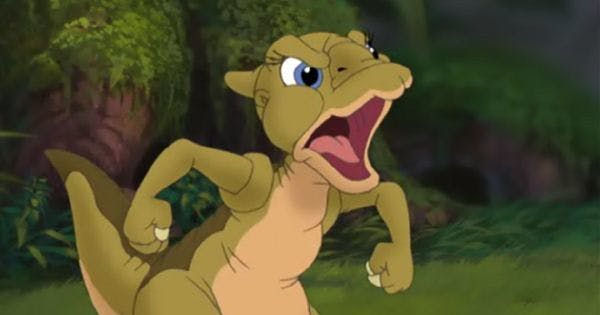
If--growing up--you were a fan of a certain band of baby dinosaurs and their many adorable adventures, you've probably seen your share of "duck-bills"--two-legged dinosaurs with funny-shaped heads and those distinctive flat beaks. More formally, duck-bills fall under the family of Hadrosaurs.
By far the most iconic and well-known of the Hadrosaurs (and the subject of this week's post) is Parasaurolophus.
Its long, curved, and hollow crest makes it a stand-out among stand-outs. And here's why:
Unlike other Hadrosaurs whose heads were adorned with solid crests, Parasaurolophus' hollow crest started in the nose, ran up past the back of the skull, and then doubled back the way it came. Paleontologists have a few theories as to why our friend evolved this way.
Swedish paleontologist Carl Wiman started the widely-held theory that Parasaurolophus used its hollow crest as a giant sound-resonating chamber. Fossil records suggest that many Hadrosaurs had excellent hearing that would have enabled them to hear the calls of their species from great distances or at high frequencies. Imagine the crest operating like that tuba your mom made you play in high school...except if you also used the tuba to call your friends over to play Mario Kart after school.
Spearheaded by James Hopson, many theorize that the huge size and shape was a form of sexual dimorphism--the differences in appearance between males and females of a species. You know, like how a peacock has all those crazy feathers but a peahen does not? And again, like a peacock, most believe it served as a mating display. Hey, pretty

lady, you like my crest?
However, for as many theories that are backed by fossil records, there are far more that have thankfully been discredited over the years. And, wooh boy, some of these are ridiculous.
Up until the 1960s, it had been a common theory that Hadrosaurs were amphibious--hence why Ducky is such a good swimmer in The Land Before Time.
So, naturally, one man by the name of Alfred Sherwood Romer theorized that Parasaurolophus used its crest as, what else, a snorkel! Martin Wilfarth thought the crest was part of a breathing proboscis (like our nightmarish Opabinia from September). Both these and similar ideas were shot down because, obviously, we have yet to find a Parasaurolophus that has a hole at the end of its crest.
Now we know that Parasaurolophus and other Hadrosaurs in the Late Cretaceous roamed across what would be North America. Except, instead of grazing the plains of the Midwest like the world's ugliest buffalo, they spent their time in the wetlands, lakes, and swamps that covered the soon-to-be-continent.
So the next time you think of peacocks or snorkels or duck-bills, picture Parasaurolophus--sentient tuba.
Top left photo credit to The Land Before Time and Universal Pictures
Bottom right photo credit to Jacob Baardse


Comments